Transparency Note: This article contains affiliate links. If you make a purchase through these links, we may earn a commission at no extra cost to you. This supports our work in bringing you free health content.

The Health Halo Trap
We all want to do the right thing for our bodies. We read magazines, follow health influencers, and try to make smart choices at the grocery store.
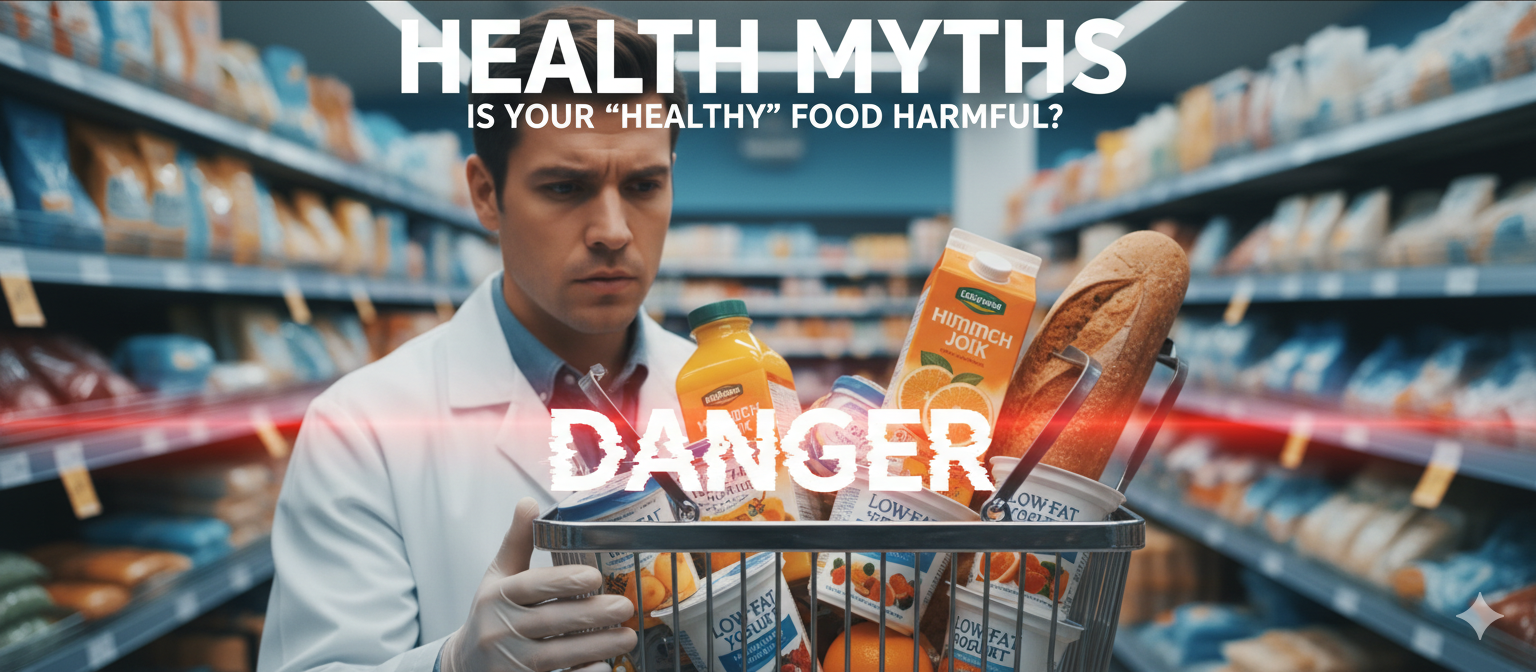
However, the food industry is a master of marketing. They often slap “Healthy,” “Natural,” or “Heart Friendly” labels on products that are anything but.
This phenomenon is known as the “Health Halo.” It tricks us into eating processed foods that silently sabotage our metabolic health.
You might be surprised to learn that some of the staples in your “diet” plan are the very things preventing you from losing weight.
In fact, certain “health foods” can spike your insulin levels, cause inflammation, and slow down your metabolic rate.
In this article, we will break down 5 hidden enemies of your health that are likely sitting in your kitchen right now.
Let’s dive in and uncover the truth behind these popular products.
1. Fruit Juices: Sugar Without the Fiber
For decades, orange juice has been the poster child for a healthy breakfast. We associate it with Vitamin C and a fresh start to the day.
However, from a metabolic standpoint, fruit juice is remarkably similar to sugary soda.
When you eat a whole piece of fruit, like an orange or an apple, you are consuming fiber. This fiber is crucial because it slows down the absorption of sugar into your bloodstream.

When you juice the fruit, you strip away almost all the fiber. What is left is a concentrated solution of sugar and water.
Most commercial juices are also pasteurized. This process kills bacteria but can also degrade some of the heat-sensitive vitamins.
When you drink a glass of juice, your blood sugar spikes rapidly. This forces your pancreas to release a massive amount of insulin.
Chronically high insulin levels are a primary driver of insulin resistance and metabolic syndrome.
Furthermore, fruit juice is high in fructose. Unlike glucose, fructose can only be processed by the liver.
When the liver is overloaded with fructose, it turns the excess into fat. This can lead to non-alcoholic fatty liver disease, even in people who don’t drink alcohol.
If you want the benefits of fruit, eat the fruit whole. Skip the liquid sugar.
A Silent Side Effect: Your Mouth Microbiome
While you worry about your liver, this “liquid sugar” is also waging war on your mouth.
The high acidity and sugar concentration in juice kill off the good bacteria in your mouth, leaving you vulnerable to decay and bad breath. Doctors recently found that people with healthy teeth have a high population of specific beneficial bacteria that sugar destroys.
2. Low-Fat Yogurt: The Sugar Bomb
During the anti-fat craze of the 1980s and 90s, fat became the enemy. Manufacturers rushed to remove fat from every product imaginable.
But there was a problem. Fat provides flavor and texture. When you remove it, food tastes like cardboard.
To fix this, food companies replaced the fat with massive amounts of sugar, artificial sweeteners, and thickeners.

A single serving of flavored low-fat yogurt can contain as much sugar as a dessert.
Consuming this much sugar creates an immediate spike in blood glucose. This completely negates the benefits of the probiotics found in the yogurt.
Moreover, dietary fat is not the enemy we once thought it was. Healthy fats are essential for hormone production and satiety.
When you eat full-fat yogurt, you feel full sooner and for longer. When you eat low-fat, sugary yogurt, you are often hungry again within an hour.
Recent studies suggest that full-fat dairy may actually be linked to a lower risk of obesity compared to low-fat dairy.
Always check the label. If the second or third ingredient is sugar (or cane juice, syrup, etc.), put it back on the shelf.
Opt for plain, full-fat Greek yogurt and add your own berries for sweetness.
3. Agave Nectar: The “Natural” Trap
Agave nectar became incredibly popular as a “healthy” alternative to refined sugar and high-fructose corn syrup.
It is often marketed as “low glycemic,” meaning it doesn’t spike blood sugar as sharply as regular sugar.
While this is technically true, it hides a much darker reality regarding metabolic health.

Agave nectar is almost entirely fructose. In fact, it can contain up to 85% fructose, which is much higher than plain sugar.
As mentioned earlier, fructose does not raise blood sugar immediately, but it goes straight to the liver.
Because the liver is the only organ that can metabolize fructose, consuming high amounts puts it under significant stress.
Excessive fructose consumption is strongly linked to insulin resistance, elevated triglycerides, and visceral fat accumulation.
Visceral fat is the dangerous belly fat that surrounds your organs and releases inflammatory signals.
Marketing agave as “natural” is also misleading. The process to extract the syrup is chemically intensive and highly processed.
It is chemically closer to high-fructose corn syrup than it is to the agave plant itself.
If you need a sweetener, small amounts of stevia, monk fruit, or raw honey are better options than agave.
4. Vegetable Oils: The Inflammation Trigger
Walk into any kitchen, and you will likely find a bottle of soybean, canola, corn, or sunflower oil.
These oils are often promoted as “heart-healthy” because they lower cholesterol in the short term.
However, these oils are very high in Omega-6 fatty acids.

While we need some Omega-6s, modern diets provide far too much of them compared to Omega-3s.
This imbalance drives systemic inflammation in the body. Chronic inflammation is a root cause of many metabolic diseases.
Inflammation Attacks Your Senses Too
It’s not just your joints or heart that suffer. Systemic inflammation is the #1 enemy of the delicate hair cells inside your inner ear.
If you have been noticing a “ringing” or “buzzing” sound in your ears lately, or if conversations feel muffled, it might be due to inflammatory damage, not just “aging.”
Before you buy hearing aids, try supporting your body’s natural anti-inflammatory response with this plant-based formula containing Capsicum and Green Tea.
👉 Discover the “Audifort” drops that silence the ringing and support healthy hearing
Furthermore, these seed oils are highly unstable. They oxidise easily when exposed to heat, light, or air.
When you cook with them, they can release toxic compounds called aldehydes.
The processing of these oils is also concerning. They are often extracted using harsh solvents like hexane.
They are then bleached and deodorized to remove the rancid smell of the oxidized oil.
This is not a natural food. It is an industrial product.
For a better metabolic boost, switch to stable fats like extra virgin olive oil, avocado oil, or coconut oil.
These fats are less processed and have better profiles for heart and metabolic health.
5. Whole Wheat Bread: The Glucose Spike
“Whole grains” are the holy grail of conventional nutrition advice. We are told to swap white bread for whole wheat for better health.
While whole wheat does contain more fiber than white bread, the difference is often negligible in the context of blood sugar.
Modern wheat has been cross-bred and genetically altered over decades to grow faster and be more resistant to pests.

This modern wheat contains a carbohydrate called Amylopectin A. This starch is digested and absorbed incredibly quickly.
Many studies have shown that two slices of whole wheat bread can spike blood sugar as much as, or even more than, two tablespoons of pure sugar.
This rapid rise in glucose triggers the insulin roller coaster we discussed earlier.
Additionally, wheat contains gluten, a protein that many people have trouble digesting.
Even if you don’t have Celiac disease, gluten can cause mild inflammation in the gut lining for sensitive individuals.
This inflammation can interfere with nutrient absorption and contribute to autoimmune issues.
If you love bread, consider sourdough. The fermentation process breaks down some of the gluten and lowers the glycemic index.
Alternatively, look for breads made from sprouted grains, which are easier on the metabolism.
Take Control of Your Plate
The most important takeaway for your metabolic health is to become a detective.
Marketing claims on the front of the package are designed to sell, not to heal.
The real truth is always found on the back of the package, in the ingredients list and nutrition facts.
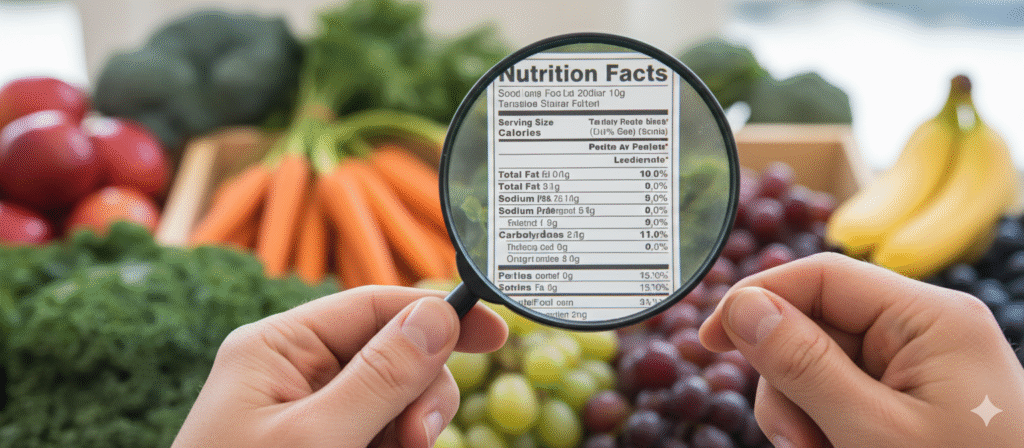
By eliminating liquid sugars, avoiding highly processed fats, and being skeptical of “low-fat” labels, you can protect your metabolism.
Your body is a complex machine that runs best on whole, unprocessed fuel.
Focus on vegetables, high-quality proteins, and healthy fats found in nature, not factories.
Be attentive to labels. Your health is in your hands.
P.S. Remember, digestion and metabolism start in the mouth. You can’t have a healthy body if your oral health is suffering.
If you’ve been eating these “healthy” sugary foods for years, your oral microbiome might be out of balance. Doctors recently formulated a unique probiotic blend to fix this. It’s not a toothpaste—it’s a delicious soft chew.
👉 Watch the video: How to rebuild your teeth and gums naturally with probiotics
Medical Disclaimer: The information presented in this article is for educational and informational purposes only and is not intended as medical advice. The content is not a substitute for professional medical diagnosis, treatment, or advice. Always consult with a qualified healthcare provider before making any changes to your diet, exercise routine, or supplement intake. The statements regarding dietary supplements have not been evaluated by the FDA and are not intended to diagnose, treat, cure, or prevent any disease.
References & Sources
- PubMed: Studies regarding Fructose consumption and non-alcoholic fatty liver disease.
- World Health Organization (WHO): Guidelines on Sugar intake for adults and children.
- The American Journal of Clinical Nutrition: Research on Dietary fats and metabolic health.
- Harvard Health: Articles concerning Glycemic Index and heavy grain consumption.